

Can Dogs Eat Coconut? Benefits, Risks and Safety Tips
Can dogs eat coconut? Yes, most healthy dogs can eat a small amount of plain coconut. It can be an occasional treat. Coconut contains fiber, fat, and some vitamins. However, too much can upset your dog’s stomach. It may also add extra calories to their diet. Always remove the hard shell before serving coconut. Cut the flesh into small pieces.
Avoid coconut products with added sugar or harmful ingredients. Some products, such as coconut oil and coconut cream, are high in fat. If your dog has health problems, ask your vet before feeding coconut. This guide covers the coconut benefits for dogs, possible risks, and safe feeding tips.
Is Coconut Safe for Dogs?
Yes, dogs can eat small amounts of plain coconut flesh. Remove the hard shell and outer husk first. Cut the coconut into small pieces so your dog can chew it easily.
Too much coconut can cause vomiting or diarrhea. It is also high in fat and calories. If your dog has pancreatitis or stomach problems, ask your vet before feeding coconut.
Is Coconut Good for Dogs? Health Benefits and Risks
Coconut contains fiber, fat, and small amounts of vitamins and minerals. These nutrients support normal body functions. However, dogs get the nutrients they need from a complete and balanced diet. Coconut is not necessary for their health.
Too much coconut can cause stomach upset, diarrhea, or weight gain. It is high in fat and calories. Dogs with pancreatitis should be especially careful with fatty foods. Coconut is also not a proven treatment for skin or coat problems.
Can Dogs Eat Raw Coconut and Coconut Flakes?
Dogs can eat a small amount of plain raw coconut. Remove the shell and husk before serving it. Cut the flesh into small pieces to reduce the risk of choking.
Dogs can also try unsweetened coconut flakes in small amounts. Check the package for added sugar and other ingredients. Dried coconut contains less water than fresh coconut, so it can be easier to overfeed. Never give your dog hard coconut shell pieces.
Can Dogs Have Coconut Oil?
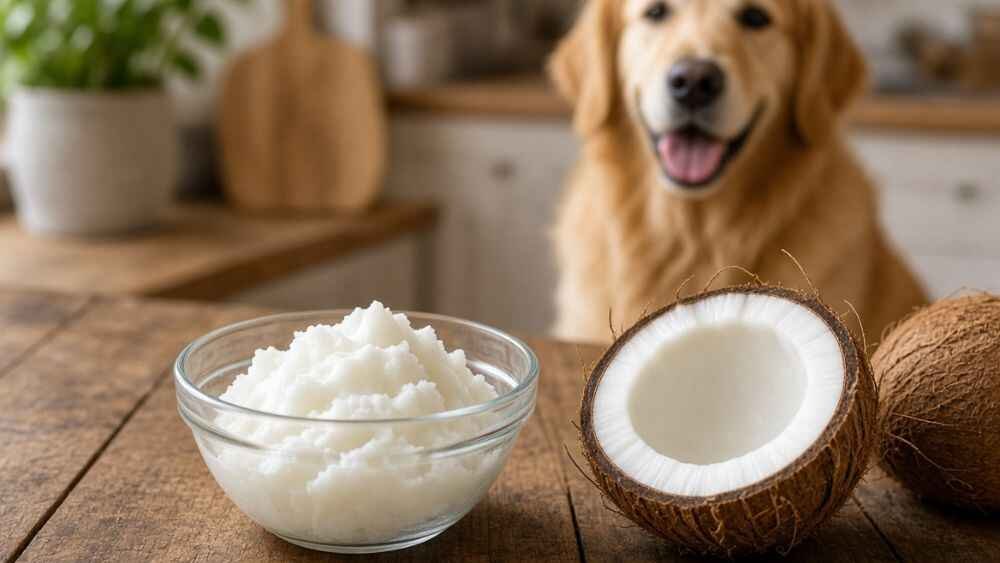
Dogs can have a tiny amount of coconut oil, but it is not needed in their diet. Coconut oil contains fat and medium chain triglycerides. However, it is not the same as specially formulated MCT products used in some veterinary diets.
Some owners use coconut oil for their dog’s skin and coat. However, there is limited evidence that it helps with these problems. Too much can cause diarrhea, stomach upset, and weight gain. Ask your vet before adding coconut oil to your dog’s food.
Can Dogs Drink Coconut Water?

Dogs can have a small taste of plain coconut water. However, fresh drinking water is always the better choice. Coconut water contains natural sugars and minerals that dogs do not need from a drink.
Avoid coconut water with added sugar or other ingredients. Large amounts may upset your dog’s stomach. Dogs with kidney or heart problems may also need to limit certain minerals. Ask your vet before giving coconut water to a dog with a medical condition.
Can Dogs Have Coconut Milk or Coconut Cream?
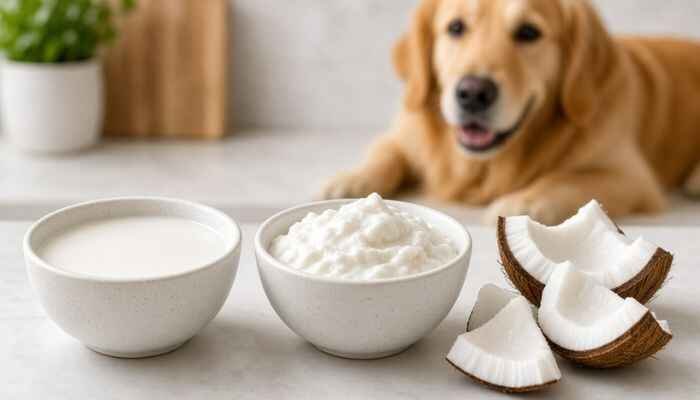
Dogs may tolerate a small taste of plain coconut milk. However, some products contain added sugar, flavorings, or other ingredients. Coconut milk can also contain a lot of fat, especially in canned products.
Coconut cream is thicker and usually richer in fat. Too much can cause digestive problems and add extra calories. Avoid sweetened coconut drinks and products with unsafe ingredients. If your dog has pancreatitis or a sensitive stomach, ask your vet before offering these products.
Can Dogs Eat Coconut Ice Cream or Cookies?
Coconut ice cream is not always safe for dogs. It may contain lots of sugar, milk, or other ingredients that upset the stomach. Some sugar-free products contain xylitol, which is toxic to dogs. Always check the ingredient label before sharing food.
Coconut cookies can also contain butter, sugar, chocolate, or raisins. These ingredients may harm your dog. Even plain cookies can add unnecessary calories. Like cookies, bacon is also high in fat and should not become a regular treat.A small piece of fresh coconut is a simpler option. Avoid giving your dog desserts made for humans.
Can Dogs Eat Coconut Sugar?
Coconut sugar is not a healthy treat for dogs. It is still added sugar, even though it comes from the coconut palm. Dogs do not need extra sugar in their diet.
Eating sugary foods often can add too many calories. This may lead to weight gain over time. Check food labels before sharing baked goods with your dog. Choose suitable dog treats instead of sweet foods.
How Much Coconut Can Dogs Eat Safely?
The safe amount depends on your dog’s size, health, and daily diet. Start with a very small piece of plain coconut. Watch your dog for signs of stomach upset. Stop feeding it if your dog develops vomiting or diarrhea.
Treats should make up only a small part of your dog’s daily calories. A common guideline is to keep treats below 10% of daily calories. The rest should come from a complete and balanced diet. Coconut should be an occasional treat, not a meal replacement.
| Dog size | Feeding advice |
| Small dogs | Start with a tiny piece. |
| Medium dogs | Offer a small piece and watch for stomach problems. |
| Large dogs | Start small instead of giving a large serving. |
| Dogs with health problems | Ask your vet before offering coconut. |
Commercial dog food labelled complete and balanced provides the nutrients your dog needs. If your dog needs to lose weight or has digestive problems, ask your vet whether coconut is suitable.
Can Dogs Be Allergic to Coconut?
Some dogs may react badly to coconut. Signs can include itching, skin redness, vomiting, or diarrhea. These symptoms can also have other causes, so a vet can help identify the problem.
Stop feeding coconut if you notice a possible reaction. Contact your vet if the symptoms continue. If your dog develops facial swelling or has trouble breathing, seek emergency veterinary care. Do not offer coconut again until you have received suitable advice.
Conclusion
Dogs can usually eat a small amount of plain coconut. Remove the shell and husk, and serve the flesh in small pieces. Avoid sweetened coconut products and foods with unsafe ingredients.
Frequently Asked Questions
1. Can dogs eat coconut?
Yes, dogs can eat small amounts of plain coconut flesh. Remove the hard shell and avoid sweetened coconut.
2. Can dogs eat coconut oil?
Dogs can have tiny amounts, but coconut oil is high in fat and may cause stomach upset. Ask your vet before adding it to their diet.
3. Is coconut good for dogs’ skin?
Coconut contains nutrients that may support skin health, but it is not a proven treatment for skin problems or itching.
4. Can dogs drink coconut juice?
Dogs can have a small amount of plain coconut water occasionally, but fresh water is always the best choice.
5. Can Shih Tzus eat coconut meat?
Yes, Shih Tzus can eat a tiny amount of plain, shell-free coconut meat cut into small pieces.
6. Can I give my dog a coconut to play with?
It is not recommended because the hard shell and husk can damage teeth or cause choking or intestinal blockage.
7. Can dogs have coconut milk?
Dogs can have a tiny amount of plain, unsweetened coconut milk occasionally, but too much fat may upset their stomach.
8. Is coconut good for dogs’ teeth?
Coconut is not a proven way to clean dogs’ teeth. Regular tooth brushing with dog-safe toothpaste is more effective.